
← Back to news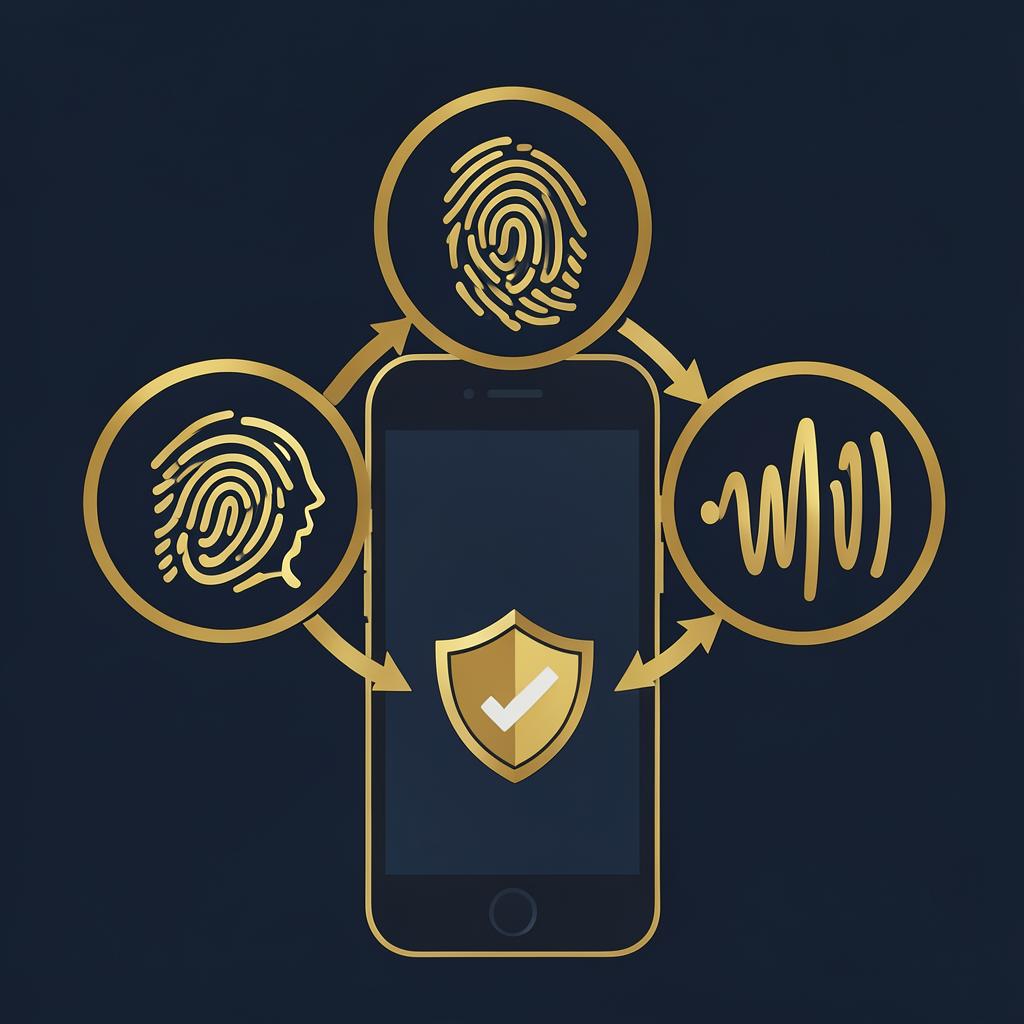
Multimodal Biometrics in KYC: How It Works
· 5 min read
Combining face, liveness, voice and behavioural signals raises accuracy and makes spoofing far harder than any single modality.
One modality is a single point of failure
Any single biometric can be attacked. A face can be spoofed with a high-resolution print, a replayed video or a synthetic deepfake. A voice can be cloned from a few seconds of recorded audio. A fingerprint can be lifted. Each attack requires different effort and different equipment — which is precisely why combining modalities works.
Multimodal biometrics means capturing two or more independent traits and fusing them into a single decision. An attacker then has to defeat every layer simultaneously, in one session, under time pressure.
The layers in a typical KYC flow
Face comparison matches a live selfie against the portrait in the identity document and, where available, against a government or prior-enrolment reference.
Passive liveness analyses texture, depth cues, reflection and micro-movement to confirm a real person is present, without asking the user to perform actions. Active challenges — turning the head, reading a phrase — can be added for higher-risk cases.
Voice biometrics compare a short spoken sample against an enrolled voiceprint, useful for contact-centre and re-authentication journeys.
Behavioural signals — typing rhythm, device handling, navigation patterns — run silently in the background and are strong indicators of automation or session takeover.
How fusion scoring works
Rather than requiring every check to pass independently, a fusion model weighs each signal by its reliability in that context and produces one probability with a confidence interval. A slightly weak face match combined with strong liveness and clean behavioural signals can clear; a strong face match with anomalous device signals can be held for review.
This is what allows genuine customers with imperfect capture conditions to pass while the overall fraud rate falls.
Privacy and consent are part of the design
Biometric data is special-category personal data under GDPR and equivalent regimes. That means explicit consent, a clear retention policy, encryption in transit and at rest, template storage rather than raw images wherever possible, and a documented lawful basis.
Users should also be told what is being captured and why, and offered an alternative route if they decline. Handled properly, multimodal verification improves both security and the customer experience — most users never see more than a document scan and a selfie.